

Getting a flat tire always seems to happen at the worst possible moment—late for work, stuck on a highway shoulder, or miles away from help. The good news? Learning how to change a tire is easier than most people think, and it’s a skill that can save you time, money, and stress.
In this guide, we’ll walk through how to change a tire step by step, explain what tools you actually need, and cover special situations like changing a tire without a jack or handling tire pressure sensors. Whether you’re dealing with a car or a bike, this article has you covered.
Why Knowing How to Change a Tire Matters
A flat tire isn’t just inconvenient—it can also be unsafe if handled incorrectly. Knowing the steps on how to change a tire helps you:
-
Stay safe on the road
-
Avoid expensive towing fees
-
Get back on your way quickly
-
Feel confident handling basic car maintenance
It’s one of those life skills that pays off every single time you need it.
Tools You’ll Need to Change a Tire
Before diving into the process, make sure you have the right tools. Most cars come with these in the trunk.
Basic Tire-Changing Tools
-
Spare tire (properly inflated)
-
Jack
-
Lug wrench
-
Wheel wedges or blocks
-
Flashlight (especially at night)
-
Gloves (optional, but helpful)
Check your spare tire every few months. A flat spare won’t help anyone.
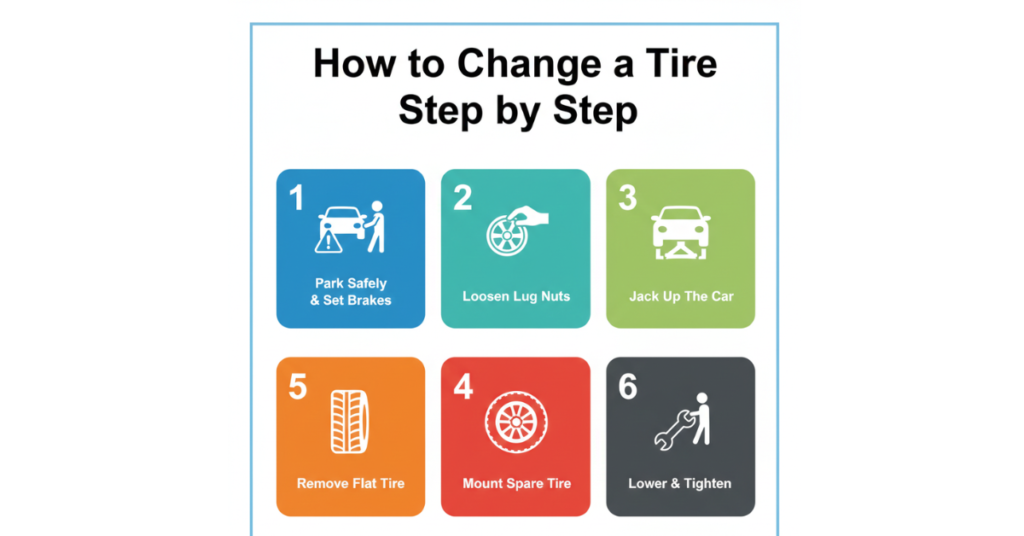
How to Change a Tire on a Car Step by Step
This is the standard and safest method for most vehicles.
Step 1: Pull Over and Stay Safe
-
Move to a flat, stable area away from traffic
-
Turn on hazard lights
-
Apply the parking brake
Safety always comes first—never rush this part.
Step 2: Loosen the Lug Nuts
-
Use the lug wrench to loosen (not remove) the lug nuts
-
Turn counterclockwise
-
Use your body weight if they’re tight
Loosening them while the car is still on the ground prevents the wheel from spinning.
Step 3: Jack Up the Vehicle
-
Place the jack under the manufacturer’s recommended jack point
-
Raise the car until the tire is off the ground
You can find jack point diagrams in your vehicle owner’s manual.
Step 4: Remove the Flat Tire
-
Fully remove the lug nuts
-
Pull the tire straight toward you
-
Lay it flat so it doesn’t roll away
Step 5: Install the Spare Tire
-
Align the rim with the wheel bolts
-
Push the tire on until it sits flush
-
Hand-tighten the lug nuts
Step 6: Lower the Car and Tighten Lug Nuts
-
Lower the car until the tire touches the ground
-
Tighten lug nuts in a star pattern
-
Fully lower the car and tighten again
This ensures even pressure and prevents wobbling.
How to Change a Tire Step-by-Step With Pictures
Images showing each step can significantly improve understanding and reduce mistakes.
How to Change a Tire Without a Jack
While not ideal, it can be done in emergencies.
When This Works
-
On older vehicles
-
When the tire is completely flat
-
Using ramps, bricks, or roadside elevation
Warning: This method is risky and should only be used if no jack is available.
How to Change a Tire on a Rim
This is common for off-road vehicles, motorcycles, and bikes.
Basic Steps
-
Deflate the tire completely
-
Break the bead using tire levers
-
Remove the tire from the rim
-
Fit the new tire and reseat the bead
This process requires practice and physical effort but is doable with patience.
How to Change a Tire on a Bike
Changing a bike tire is simpler but still requires care.
Bike Tire Steps
-
Release the brakes
-
Remove the wheel
-
Use tire levers to remove the tire
-
Replace or patch the tube
-
Reinstall and inflate
Great skill for commuters and long-distance riders.
How to Change a Tire Pressure Sensor TPMS
Tire pressure sensors monitor air pressure and trigger dashboard warnings.
Important Notes
-
Sensors are usually attached to the valve stem
-
Improper handling can damage them
-
Many replacements require recalibration
For most drivers, this is best handled by a professional unless you have experience.
Common Mistakes to Avoid
-
Forgetting to loosen lug nuts before jacking
-
Jacking on uneven ground
-
Overtightening lug nuts
-
Driving long distances on a temporary spare
FAQs: How to Change a Tire
How long does it take to change a tire?
Most people can change a tire in 15–30 minutes with practice.
Can I drive on a spare tire long-term?
No. Temporary spare tires are designed for short distances only.
Do I need to replace all tires if one goes flat?
Not usually—unless tread wear is uneven or the tire is damaged beyond repair.
Is it safe to change a tire on the highway?
Only if absolutely necessary. Move as far off the road as possible and stay alert.
How often should I check my spare tire?
At least every 3–6 months.
Conclusion: Be Ready Before You Need It
Learning how to change a tire on a car isn’t just about mechanics—it’s about confidence and safety. Once you understand the steps and practice them, a flat tire becomes a minor inconvenience instead of a major problem.