
Ever stood in your kitchen mid‑recipe wondering how many ounces in a cup—and whether it changes depending on what you’re measuring? You’re not alone. This is one of the most searched cooking questions for a reason, and the answer isn’t always as straightforward as it seems.
In this guide, we’ll break down how many ounces in a cup for liquids, dry ingredients, coffee, butter, and more—using clear examples that actually make sense. Whether you’re baking, cooking, or just trying to measure a cup of water, you’ll walk away confident and ready to measure like a pro.
How Many Ounces in a Cup? The Quick Answer
In the U.S. standard measurement system:
-
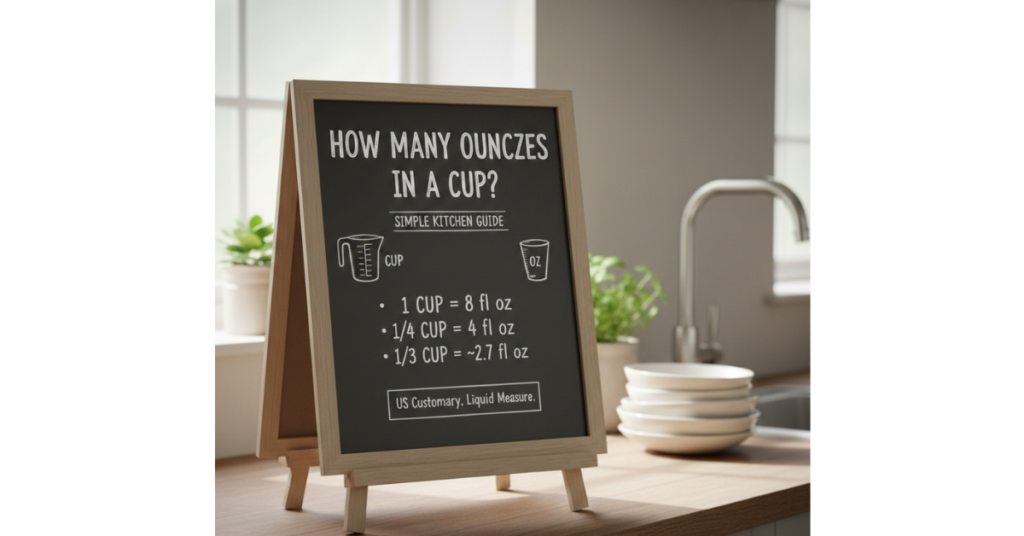
1 cup = 8 fluid ounces
This applies to liquid ingredients, such as water, milk, juice, or coffee. But when it comes to dry ingredients, things work a little differently—and that’s where confusion usually starts.
How Many Ounces in a Cup of Water?
When measuring liquids, ounces are measured by volume, not weight.
-
1 cup of water = 8 fluid ounces
-
1 cup of water ≈ 237 milliliters
Because water has a consistent density, this measurement is reliable and universal in U.S. recipes. The same rule applies to most liquids.
Common liquid examples:
-
Water
-
Milk
-
Coffee
-
Broth
-
Juice
How Many Ounces in a Cup of Coffee?
If you’re brewing or pouring coffee at home:
-
1 cups of coffee = 8 fluid ounces
However, it’s worth noting that some coffee makers define a “cup” as 5–6 ounces, which is a branding choice—not a standard measurement. For recipes and accurate measuring, always stick to 8 ounces per cup.
How Many Ounces in a Cup Dry Ingredients?
Dry ingredients are measured by weight, not fluid ounces. This means the number of ounces in a cups depends on the ingredient.
Here’s where many people get tripped up.
How Many Ounces in a Cup of Flour?
-
1 cup of all-purpose flour ≈ 4.25 ounces
Flour is light and airy, so scooping method matters. For best results:
-
Fluff the flour
-
Spoon it into the cup
-
Level it off
How Many Ounces in a Cup of Butter?
-
1 cups of butter = 8 ounces (by weight)
Butter is an exception because it’s sold and measured in standardized sticks:
-
1 cups = 2 sticks
-
Each stick = 4 ounces
How Many Ounces in a Cup (Dry Ingredient Examples)
| Ingredient | Ounces per Cup (Approx.) |
| Flour (all-purpose) | 4.25 oz |
| Sugar (granulated) | 7 oz |
| Brown sugar (packed) | 7.5 oz |
| Butter | 8 oz |
| Rice (uncooked) | 6.5 oz |
How Many Ounces in a Cup and a Half?
Sometimes recipes call for more than one cup, and quick math helps.
-
1.5 cups = 12 ounces (liquid)
This applies to:
-
Water
-
Milk
-
Coffee
-
Any liquid ingredient
For dry ingredients, multiply the weight per cup by 1.5.
Why Cups and Ounces Can Be Confusing
The confusion usually comes from mixing:
-
Fluid ounces (volume)
-
Ounces (weight)
They sound the same but measure different things. Liquids use fluid ounces, while dry ingredients vary based on density.
Pro tip:
If precision matters (especially for baking), a kitchen scale is your best friend.
U.S. Cups vs Metric Cups
Not all cups are created equal.
-
U.S. cup: 8 fl oz (237 ml)
-
Metric cup: 250 ml (about 8.45 fl oz)
If you’re using international recipes, double‑check which system they follow.
FAQs: How Many Ounces in a Cup
Is 8 ounces always equal to 1 cup?
For liquids in the U.S., yes. For dry ingredients, it depends on the ingredient.
How many ounces in a cups of flour for baking?
About 4.25 ounces, depending on how it’s measured.
How many ounces in a cups of butter?
Exactly 8 ounces, or two standard sticks of butter.
How many ounces in a cups of water or coffee?
Both equal 8 fluid ounces.
Does dry and liquid measurement use the same cup?
Yes, the cups size is the same, but ounces are calculated differently based on weight vs volume.
Conclusion: Measuring Made Simple
So, how many ounces in a cup? The short answer is 8 ounces for liquids, but dry ingredients vary depending on what you’re measuring. Once you understand the difference between fluid ounces and weight ounces, cooking and baking become much easier—and far less frustrating.
If you cook often, consider bookmarking a conversion chart or investing in a digital kitchen scale. And if this guide helped, explore related articles on measurement conversions, baking tips, or kitchen essentials to keep leveling up your skills.